 Airtime Vending
  Payment Terminal Solution
  Hardware Services
  Managed Services
  Training
  Software Services
  IT Infrastructure
  Support Hub
  E-Government Solution
  Colocation Service
  Cloud Services
  Metering
  ATM Management


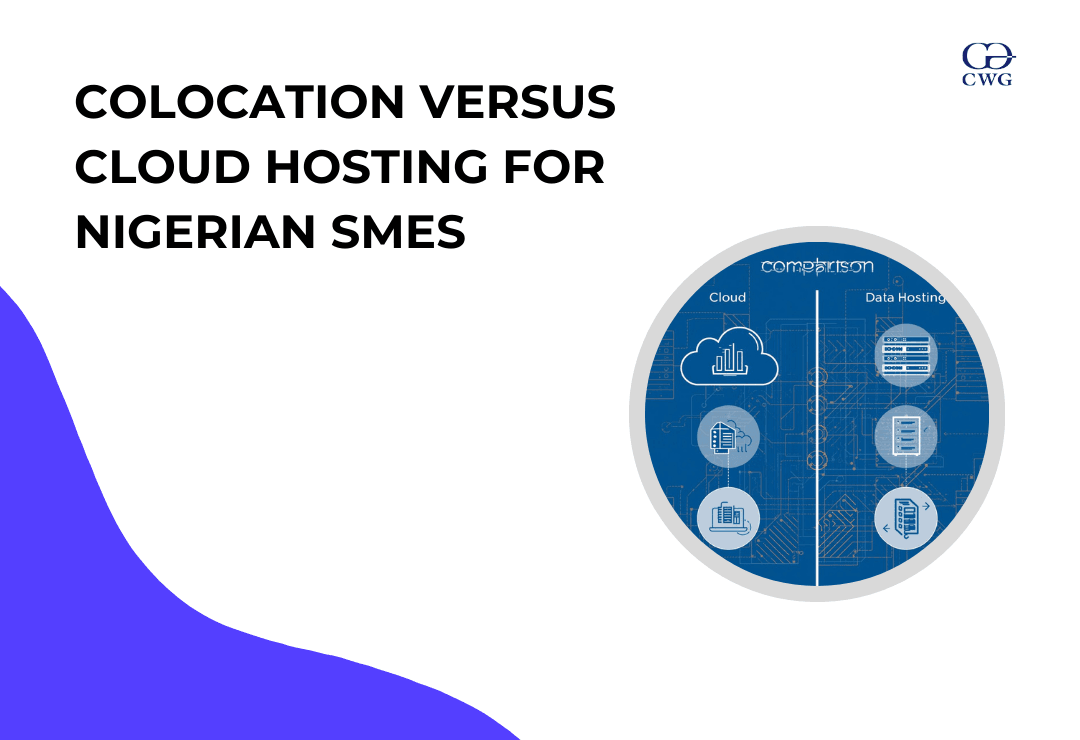
For every new Startup in Nigeria or Africa as a whole looking to rapidly evolve or even just looking for funding to expand, one of the key decisions they have to make is how to house their data. With consistent issues such as the cost of the infrastructure needed to make these possible, and the possible financial strain the decision will cause, these startups have to look through their options to decide what makes the best financial sense for them to follow.
Which then begs the main question, Should Nigerian startups focus on using cloud as their choice of where the integral data that powers their business or should they just subscribe to a Data Centre Colocation?
Eventually, what we hope you get to learn from this post will be how SMEs look through options to know how to choose based on what will work best for them. And this choice should be influenced by their needs as a company as opposed to what every other SME is doing.
In fact, for a growing number of Nigerian businesses, the answer is increasingly Hybrid, combining the strengths of both to create a secure, scalable, and cost-effective foundation.
Difference between Colocation and Cloud Hosting.
Understanding the core differences between colocation and cloud hosting is the first step toward building this optimal strategy.
1. Ownership and Control: The Fundamental Distinction
The most important difference between these two service models lies in who owns the physical computing assets and, consequently, who retains control over them.
Data Center Colocation (The Owner-Operator Model): In a colocation arrangement, your business owns the physical servers, storage arrays, and networking equipment. You are essentially renting a dedicated physical space—a rack, cabinet, or cage—within a highly secure, climate-controlled, third-party data center facility, such as those found in Lagos hubs like Ikeja or Lekki.
• You control the hardware: You select the specific server models, operating systems, and configurations. You have ultimate control over installation, patching, maintenance, and compliance, giving you granular control over your data environment.
• The Provider controls the environment: The colocation provider handles the "heavy lifting" of the physical infrastructure, including power, cooling, physical security, and bandwidth connectivity.
Cloud Hosting (The Rental Model): Cloud computing, whether public (like AWS or Azure) or private, offers virtual servers and storage. You rent computing resources—CPU cycles, memory, and virtual storage—that are abstracted away from the physical hardware.
• The Provider controls the hardware: The cloud service provider owns and manages the underlying physical servers, storage, and networking equipment.
• You control the virtual resources: You deploy your applications and data onto these virtualized resources, focusing on software development and deployment rather than hardware maintenance.
2. Cost Structure and Financial Justification
Both colocation and cloud offer significant cost savings compared to maintaining an unstable or inefficient on-premises data center in Nigeria. However, their financial models diverge sharply:
Colocation: Capital Investment with Operational Savings Colocation typically involves an initial Capital Expenditure (CAPEX) for purchasing the servers and physical equipment. Once acquired, the costs become predictable Operational Expenditure (OPEX), involving monthly rental fees for space, power consumption, and bandwidth.
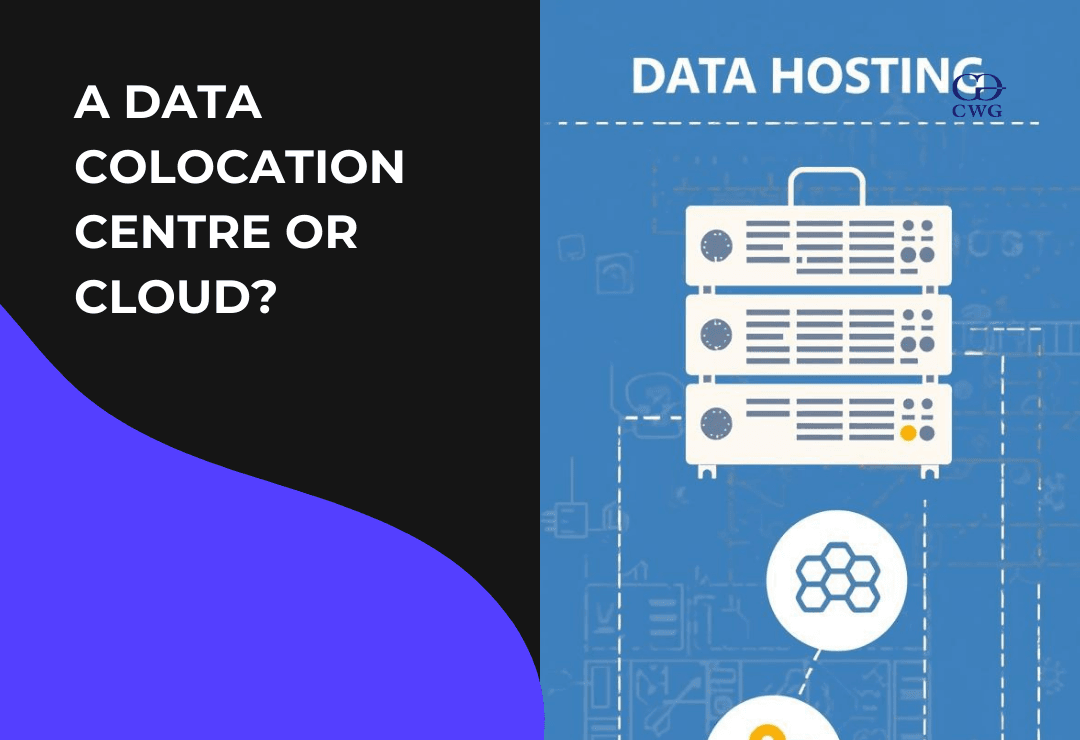
This model is ideal for companies that:
• Have long-term hardware assets with specific depreciation schedules.
• Need predictable monthly costs for power and cooling, shared with other tenants.
• Are subject to strict regulatory compliance that mandates physical ownership of hardware.
Cloud: Pure Operational Expenditure Cloud hosting is a purely pay-as-you-go model. You incur no initial hardware costs; you simply rent the resources you consume. This means costs can fluctuate based on usage, making it highly flexible but sometimes less predictable.
3. Scalability and Flexibility
The approach to scaling resources is another key differentiator:
Colocation: Scaling by Physical Increment Scaling in colocation is physical: you add more servers, racks, or cages. While modern facilities, particularly in Lagos, are built to accommodate massive future expansion , scaling up requires planning and physical installation. However, providers offer instant access to advanced technologies and expertise, ensuring your services are optimal and can grow alongside your business. Colocation facilities also benefit from sophisticated disaster recovery support, allowing organizations to distribute equipment over multiple data centers for enhanced geo-redundancy—a crucial advantage in the West African market.
Cloud: Scaling by Virtual Increment Scaling in the cloud is virtually instantaneous. You can provision or de-provision resources (like CPU or RAM) on demand, often automatically, to meet sudden spikes in traffic. This elasticity is what makes the cloud perfectly suited for workloads with unpredictable demand, such as e-commerce during peak sales or temporary, large-scale projects.
4. Hybrid IT: The Best of Both Worlds for Nigerian Enterprise
Increasingly, the optimal strategy for established Nigerian enterprises is not to choose between colocation and cloud, but to use them together. Colocation is often leveraged as the secure, high-control foundation for a Hybrid IT strategy.
Many of the world's largest cloud providers actually lease space in colocation facilities to house the physical servers that power their cloud offerings. This positions the colocation data center as the essential, carrier-neutral hub for interconnection.
By placing mission-critical systems and latency-sensitive applications (like high-frequency trading or large databases) in a high-reliability, Tier III certified colocation facility, a business can maintain complete control over its core assets. It can then use the flexibility of the public cloud for secondary workloads, testing environments, or bursting capacity.
Colocation ensures your dedicated servers benefit from shared, highly resilient physical resources—including multilayer redundancy for cooling and power systems—while cloud provides the operational agility required for rapid digital innovation.
For Nigerian SMEs focused on both growth and resilience, adopting a hybrid strategy—using colocation as the stable core and the cloud for elasticity—provides the perfect blueprint for sustainable digital transformation.
For companies and SMEs’ looking to explore the possibilities and benefits a Colocation Data centre offers, click below to reach out to the team at CWG – a company with over 30 years in the tech infrastructure sector, with the right resources, personnel and knowledge to help you scale as a business. Click here to send us a mail.